A Mile Up
Closed Winter Houses and Combustion Air
A tight house in January and a pro range asking for air is a real conflict. Viking Appliance Repair Denver — call (720) 770-4189.
Written by Natalia Vukovic
Role Service technician — water systems and leaks · 17 years in the trade
In the trade Finds where the water goes before deciding what is wrong. A seal that shrank at the corner and a fitting that weeps look the same on the floor and cost nothing alike.
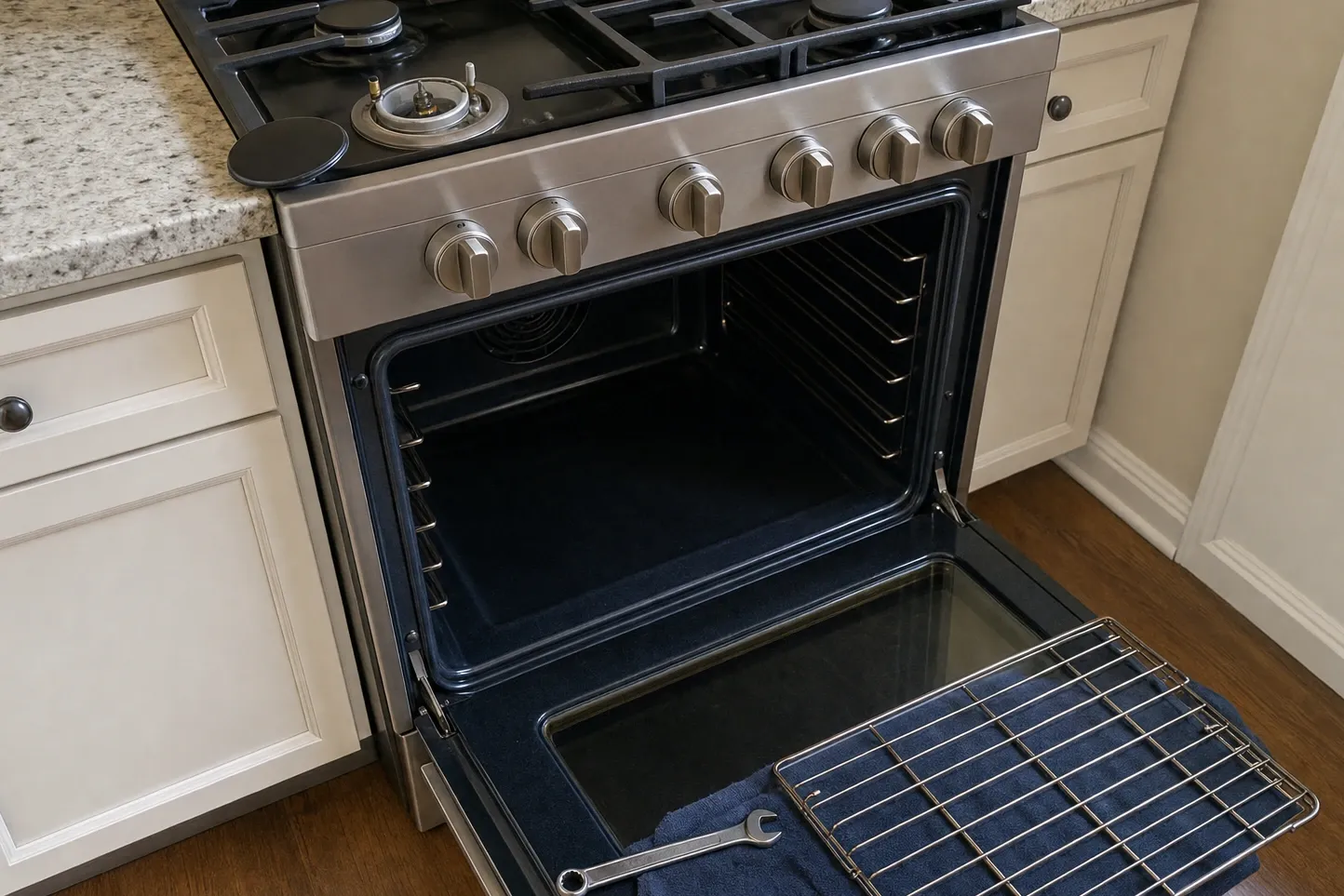
A pro kitchen is a collection of appliances that move a great deal of air, put into houses that get built tighter every year. For most of the year the two never collide. In January, with everything shut and the heating running hard, they can — and the appliance that suffers is rarely the one that caused it.
What a sealed house does to a gas appliance
Anything that burns fuel needs air, and a vented appliance needs more air again to carry its flue gases out. The code treats that as a quantity to be supplied rather than something a building happens to provide: combustion, ventilation and dilution air comes from a space of adequate volume or from outdoors, and where the indoor route cannot be satisfied, outdoor air has to be introduced.
Volume is the part that catches people out. The indoor air method works from the space available per unit of appliance input, and it stops working where a house is tight enough that nothing is leaking in to replace what has been burned. A 1920s house with sash windows was never short of infiltration. A house built to a modern energy code, or an older one air-sealed properly during a remodel, is a different building with the same appliances standing in it.
Depressurisation and what it pulls on
A powerful kitchen hood does not create air. It removes it, and the house has to find a replacement somewhere. With the doors and windows shut and the envelope tight, the easiest path in may be back down the flue of something else that burns — a water heater, a furnace on an atmospheric vent, an open fireplace.
That is backdrafting, and it is the mechanism worth understanding because it explains why the symptom turns up in the wrong room. The code anticipates it directly: where exhaust fans, dryers and kitchen ventilation interfere with the operation of appliances, make-up air has to be provided. The residential code also names an exhaust rate above which a make-up air system is required outright in a house containing fuel-burning appliances that are not direct-vented, with a damper that opens by itself whenever the exhaust runs.
Winter is when it bites. The doors that stood open in June are shut, the heating appliances are working at their hardest, and the hood is on its top setting because something is being seared. Three conditions that rarely coincide in July.
Signs worth acting on
A few are visible to anybody. A fireplace that smokes back into the room the moment the hood is switched on. A door that becomes noticeably harder to pull open while the ventilation runs. A burner that behaves one way with the hood off and another way with it on. Condensation appearing on windows near a combustion appliance. Each of those says the house is being pulled down in pressure.
None of them is a repair. All of them are a building question, and the right response is to have the combustion appliances and the ventilation looked at together, as one system, by the trades qualified for that work — a gas fitter and a mechanical contractor rather than an appliance technician.
Who to call, and when to open a window
Draw the line clearly. We repair cooking appliances, refrigeration and dishwashers. We do not test draft, adjust combustion or certify an installation, and anyone offering to do all of that in a single visit is worth a second thought.
The one thing that is not a scheduling question: if a carbon monoxide alarm sounds, everybody leaves the building and calls 911 from outside. The federal safety advice is exactly that — get out into fresh air first, then call. Alarms belong on every level of the house and outside the sleeping areas, and interconnected ones beat separate ones, because an alarm in the basement at three in the morning only helps if the bedroom can hear it.
Then the small, unglamorous thing a designer can do while it is still cheap: make the make-up air path part of the ventilation design from the start, rather than a remedy bolted on after a client reports a smoking fireplace in a kitchen that was finished three weeks ago.
One term, defined
Combustion air
The air a fuel-burning appliance needs to burn its fuel, plus the extra air a vented appliance needs to carry its flue gases away. The code treats it as a quantity to be provided, not as something a house supplies by accident.
Spec check
Confirm each of these before anything is cut, ordered or delivered.
- Whether every fuel-burning appliance in the house is direct-vented, and which ones share air with the kitchen
- The hood's rated exhaust airflow, read off its own data, and how it compares with the code threshold
- That a make-up air path is drawn alongside the ventilation rather than added after handover
- Carbon monoxide alarms on every level and outside the sleeping areas, interconnected where possible
- Who is testing the combustion appliances once the envelope has been tightened, and when in the programme
Questions on site? Viking Appliance Repair Denver, (720) 770-4189.
Follow-ups we get asked
Does a powerful hood always need a make-up air system?
Not always, but the threshold is in the residential code and it is checked against the hood's rated airflow, not guessed. Whether fuel-burning appliances in the house are direct-vented also changes the answer, so the hood and the heating equipment are assessed together rather than separately.
Is opening a window a reasonable fix?
It is a diagnostic, not a solution. If a fireplace stops smoking back when a window is cracked, the house is short of replacement air and that is worth knowing. Relying on it through a Front Range winter is not a design, and it will be forgotten by February.
The range burns differently when the hood is on high. Is that the range?
It may not be. A burner that changes character with the ventilation running is describing the room rather than itself. Viking Appliance Repair Denver will check the appliance and say plainly if the answer lies with the building instead, on (720) 770-4189.
