Denver Water and the Wet Appliances
In-Line Filters, Bypass Plugs and the Built-In's Own Filter
Two filters in one line is one filter too many. Which one to keep. Viking Appliance Repair Denver — call (720) 770-4189.
Written by Natalia Vukovic
Role Service technician — water systems and leaks · 17 years in the trade
In the trade Finds where the water goes before deciding what is wrong. A seal that shrank at the corner and a fitting that weeps look the same on the floor and cost nothing alike.
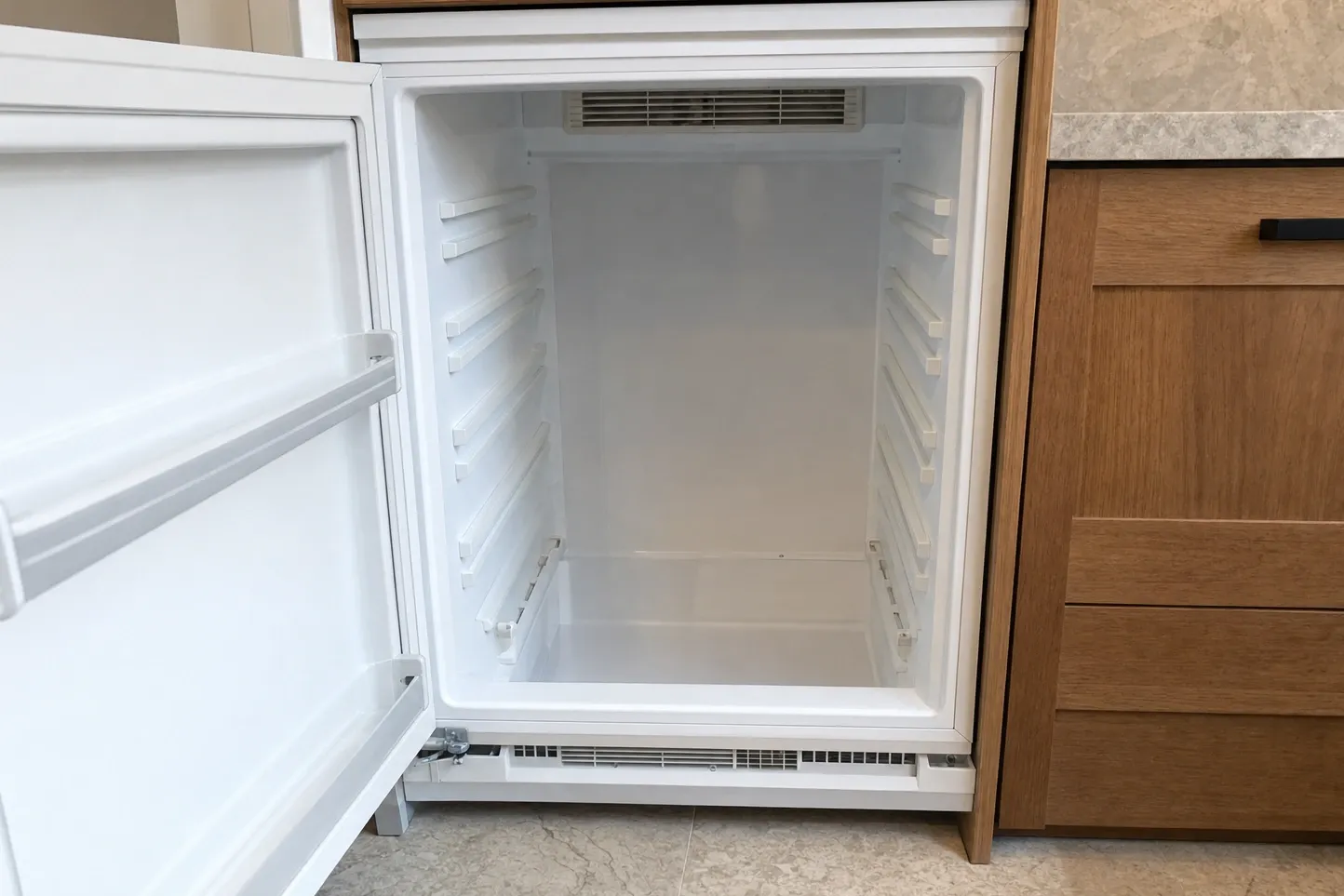
Filtration arrives in a kitchen from two directions. The appliance brings its own, because a built-in that dispenses water or makes ice normally has a filter position in it. Then the plumber, or the previous owner, adds another one under the sink or in the line feeding the refrigerator. Nobody set out to install two. It is simply what happens when two trades solve the same problem independently.
The filter you fitted and the filter it came with
Start by establishing what actually exists, because it is genuinely common not to know. Two questions settle it. Does the ordered model have a filter housing of its own, and where is it? And is there a separate cartridge somewhere on the branch that feeds it?
The answer to the first is in the documentation for the specific model rather than in a general statement about the brand — housings differ, positions differ, and so does whether the appliance expects a cartridge to be present. The answer to the second is a matter of looking under the sink and following the line.
Do both before anything is ordered. A kitchen that arrives with two filtration systems and no plan is not broken, but it will be paying twice for one result.
What two in series does to flow
Every cartridge is a restriction. Water has to be pushed through a medium, and pushing costs pressure. One filter is designed around that. Two in series subtract twice.
Where it shows is at the slowest points in the system: the dispenser takes noticeably longer to fill a glass, and the ice production rate falls off. Neither is a fault, and chasing it as a fault is how people end up replacing perfectly good components. It is arithmetic — and it gets worse as both cartridges age, because a partially loaded filter restricts more than a fresh one.
There is a second cost that is easier to overlook. Two filters mean two consumables, two replacement intervals and two things to forget. In practice one of them is always the one that gets forgotten, and an exhausted cartridge is the worst of both worlds: it has stopped filtering and it is still restricting.
What a bypass plug is for
If the decision is to filter upstream and stop using the appliance’s own position, the housing does not simply get left empty. It gets a bypass plug: a moulded insert shaped like the cartridge that passes water straight through and keeps the circuit sealed.
Two things about it are worth knowing at the specification stage. Some appliances ship with one and some do not, so it may need ordering alongside the machine. And leaving an old cartridge in as a substitute is not the same thing at all — it restricts, it holds standing water, and it does no filtering. If the appliance filter is not the one being relied on, fit the plug intended for that housing.
Deciding which one stays
Two criteria decide it, and neither is about filtration quality.
Access. A cartridge you can reach in ten seconds gets changed. A cartridge behind a built-in, in a plinth or up inside a cabinet does not, whatever the intention was on handover day. The reachable filter is the one that stays.
Coverage. A single under-sink unit can serve the kitchen tap and the appliance from one cartridge. An appliance filter serves only the appliance. If the household drinks filtered water from the tap as well, the upstream position is doing more work for the same money.
On that logic the common answer is one good filter upstream, a bypass plug in the appliance, and the replacement date written somewhere that is not a memory. But it is a decision to take deliberately, and to record on the drawing, so that the next person to open the cabinet knows which position is live and which is deliberately empty.
One term, defined
Bypass plug
A moulded insert that takes the place of a cartridge in an appliance filter housing and passes water straight through it. Fitting one keeps the circuit sealed and flowing when the filter position is deliberately left empty, which is not the same as leaving an exhausted cartridge in place.
Spec check
Confirm each of these before anything is cut, ordered or delivered.
- Whether the appliance ordered has a filter position of its own, taken from the documentation for that model
- Whether a separate in-line or under-sink filter is also being specified on the same branch
- Which of the two is being kept, decided once and recorded on the drawing
- Whether a bypass plug is supplied with the appliance or has to be ordered alongside it
- Who owns the replacement schedule after handover, and where the spare cartridges will live
Questions on site? Viking Appliance Repair Denver, (720) 770-4189.
Follow-ups we get asked
Is it a problem to have two filters on one line?
It is rarely dangerous and often disappointing. Each cartridge takes some pressure to push water through, so two in series mean slower filling and a weaker dispenser. You also end up buying and changing two consumables where one would have done the same job.
What does a bypass plug actually do?
It fills the filter housing and lets water pass straight through, keeping the circuit sealed while the cartridge position is empty. It is the correct part to use when filtration has deliberately been moved upstream, and it is a different thing from leaving an old cartridge sitting in place.
Can I just leave the old cartridge in?
An exhausted cartridge is not a bypass. It still restricts flow, it has stopped doing useful filtering, and it holds water that has been sitting in it. If the appliance filter is not the one you are relying on, replace it with the plug intended for that housing.
Which filter should we keep?
Usually the one that is easiest to change and covers the most outlets. A single under-sink unit serving the tap and the appliance beats a cartridge buried behind a built-in. Whichever position stays live, note it on the drawing so that Viking Appliance Repair Denver is not guessing at the next visit.